Hot Water Cylinder Replacement in London
£1,450 fixed for labour and miscellaneous parts to replace a cylinder, with the cylinder itself shown as its own line on a written quote. A new installation is £2,400. A diagnosis to decide repair or replace is £180.
Prices checked 27 October 2026. We do not currently charge VAT, so these are the totals for labour and parts. Pre-booked cylinder work has no call-out fee; same-day and out-of-hours emergency call-outs are £60 at any hour.
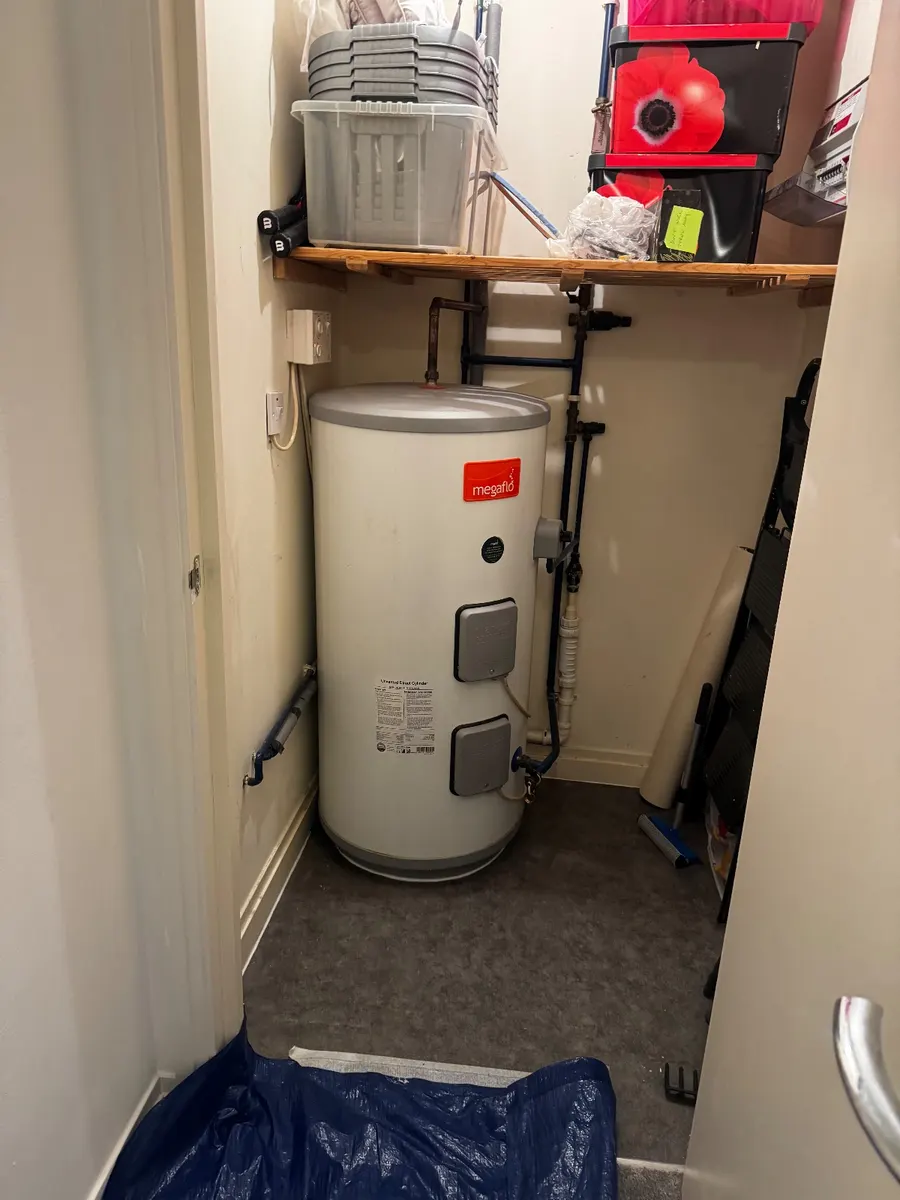
Replacing a hot water cylinder in London costs £1,450 for our labour and parts, plus the cylinder, which is priced as a separate line. A first-time installation or conversion is £2,400 plus the cylinder. Many cylinder faults do not need a new tank: in our own cylinder jobs between August and October 2026, four of sixteen were replacements.
Hot water cylinder replacement cost in London
These are the prices we quote. Labour and parts are fixed; the cylinder is a separate line because the make, size and type change the total more than anything else, and a separate line lets you compare our quote with any other.
| Job | Fixed price | What it covers |
|---|---|---|
| Cylinder fault diagnosis | £180 | Engineer attends, tests the cylinder, controls and safety devices, and gives a written repair-or-replace recommendation with a fixed price for each. |
| Cylinder replacement (labour and miscellaneous parts) | £1,450 | Like-for-like swap: drain down, remove the old cylinder, fit the new one, reconnect, commission. The cylinder itself is a separate line on your quote. |
| New cylinder installation | £2,400 | Pipework, installation, commissioning and Building Regulations work for a first-time installation or a conversion. The cylinder is a separate line on your quote. |
| Hot water cylinder service (annual unvented service) | £180 | The yearly safety and pressure checks manufacturers ask for to keep a warranty valid, with the logbook updated. |
Prices checked 27 October 2026. No VAT is currently added to any of these prices. The cylinder is quoted separately on every job. Repairs to valves, thermostats and elements are priced on the hot water repair page and confirmed in writing before work starts.
How that compares with published guides
| Job | Range quoted | Source and basis |
|---|---|---|
| Like-for-like unvented replacement | about £2,245 to £2,369 | Hamuch, London estimate pages, excluding VAT and call-out |
| Unvented replacement, UK-wide, all-in | £2,000 to £3,800 | BookaBuilderUK, with London at the top of the range |
Third-party ranges as published in October 2026. They are not our prices and mix cylinder, labour and extras differently, which is why we show ours split out.
What moves the price
- Vented to unvented. Adds work: new mains feed, discharge route to outside, expansion vessel, loft tank removed. This is the £2,400 job, not the £1,450 one.
- Discharge route. The hardest part in mid-floor flats. A long or awkward run to an outside wall costs more time than the cylinder swap itself.
- Access. Loft hatches, tight airing cupboards and top-floor flats with no lift change how long carrying and fitting takes.
- Which cylinder. Size, brand and whether it is direct, indirect or smart. This is its own line on the quote, so you can compare it with any other quote.
- Old pipework. Corroded valves or isolators that will not shut off cost extra to replace. We find these at the survey, not on the day.
Not sure which price applies? A diagnosis tells you in writing.
Call 0207 046 1363Hot water cylinder repair or replacement: what decides it
From August to October 2026 we logged 16 completed cylinder-related jobs. Four were replacements. The rest were diagnostics, valve and element repairs, a recommissioning visit, annual services and leak work. It is a small sample, but it matches the usual pattern: most cylinder complaints are a part, not the tank. From our earlier work, a failed expansion vessel typically costs £180 to £280 to replace, a temperature and pressure valve £120 to £160 and an immersion element £90 to £130, all of them far less than a new cylinder.
| What you see | It usually is | Repair or replace |
|---|---|---|
| Water dripping from the tundish only while the water is heating | Expansion vessel or its pressure has failed | RepairCylinder is usually fine. Leave the discharge pipe open. |
| Tundish running constantly, hot or cold | Pressure reducing valve or inlet group faulty | RepairValve replacement is a common job; the tank is not the fault. |
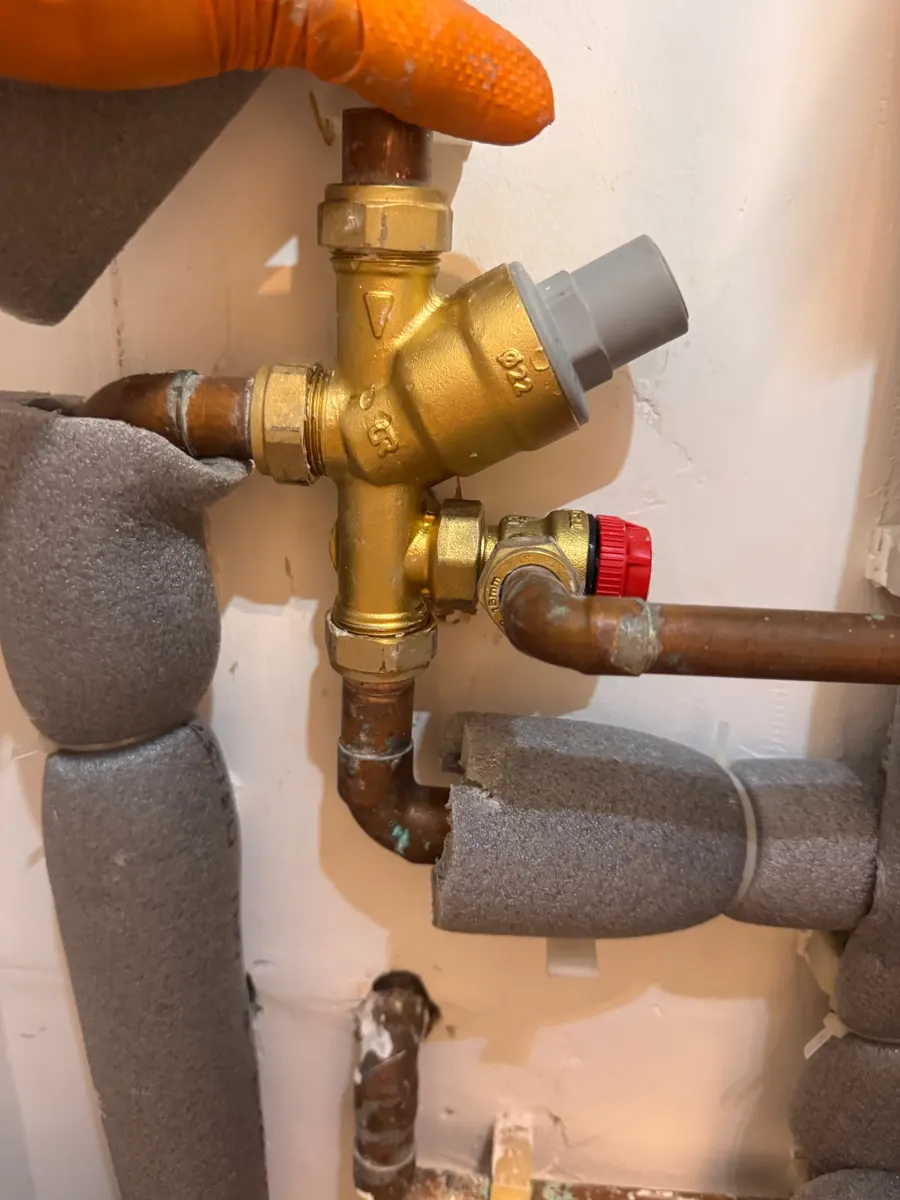
| Leak from a relief valve or combination valve | Valve has failed or is not reseating | RepairOn one August job we replaced both the temperature-and-pressure valve and the combination valve. The cylinder stayed. |
| No hot water but the heating works | Motorised valve, cylinder thermostat or immersion element | RepairFault-find before anyone suggests a new cylinder. |
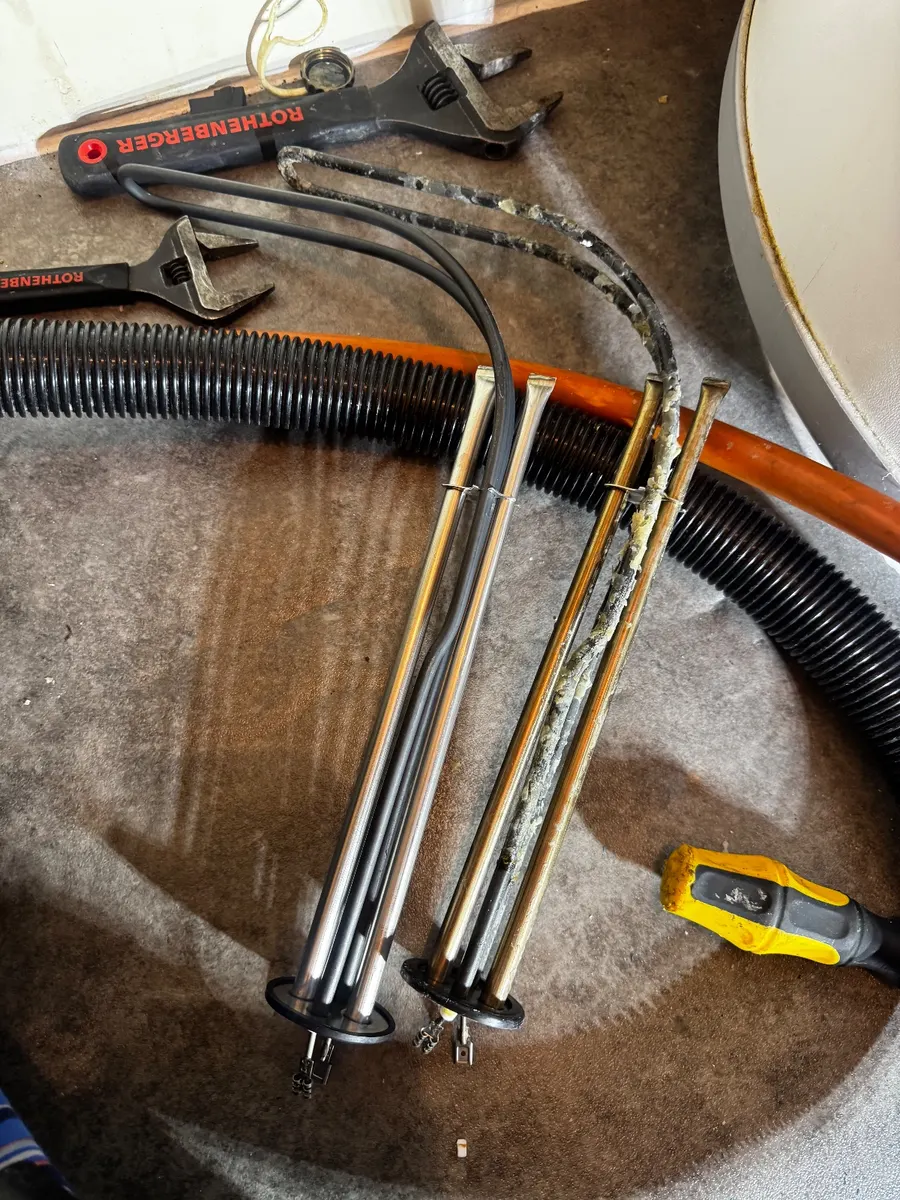
| Both immersion elements dead on an electric cylinder | Scale and age | Repair, if the tank is soundIn October we replaced top and bottom elements on one cylinder. It is a repair as long as the shell is dry. |
| Water weeping from the shell, seams or base | The tank itself has failed | ReplaceA failed shell cannot be repaired. |
| Brown water from the hot tap only, or visible corrosion | Corroding cylinder or coil | ReplaceConfirm it is the cylinder, not the pipework, before booking. |
| Second or third component failing in a year on an old unit | End of life | ReplaceRepair money starts to go into a tank that will not last. |
| Vented cylinder with a weak shower and a loft tank | Low head of water, not a fault | Replace with unventedOnly worth it if mains pressure and a discharge route allow. |
Not sure if yours is a repair? We diagnose first for a fixed £180.
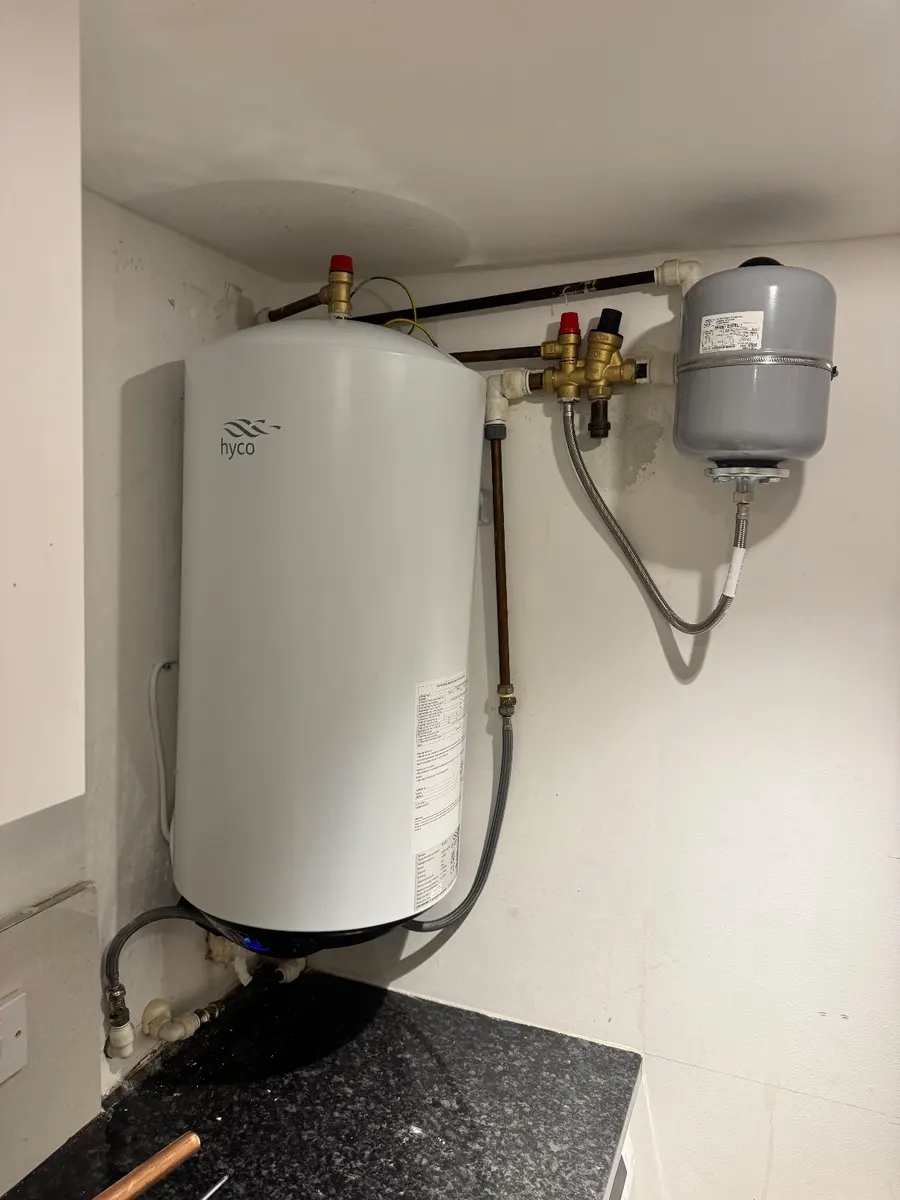
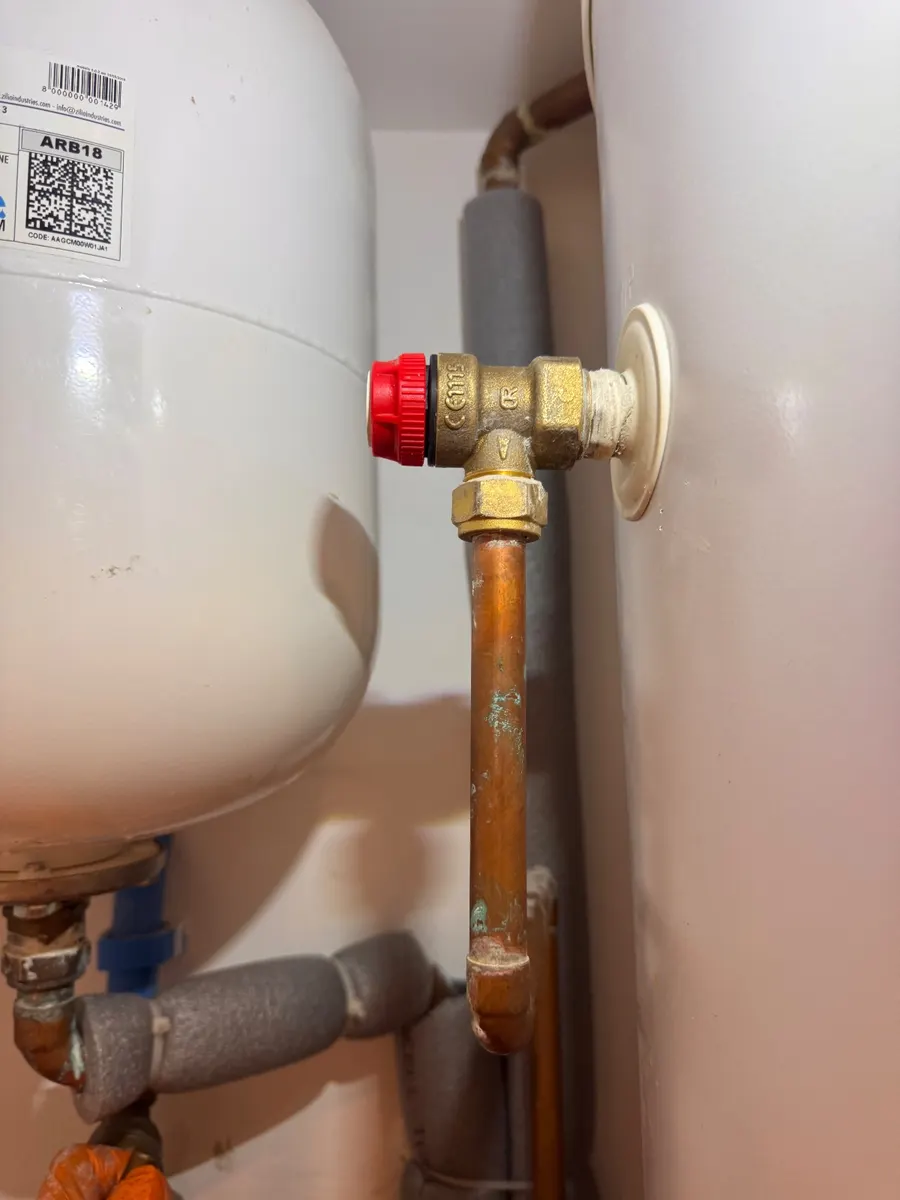
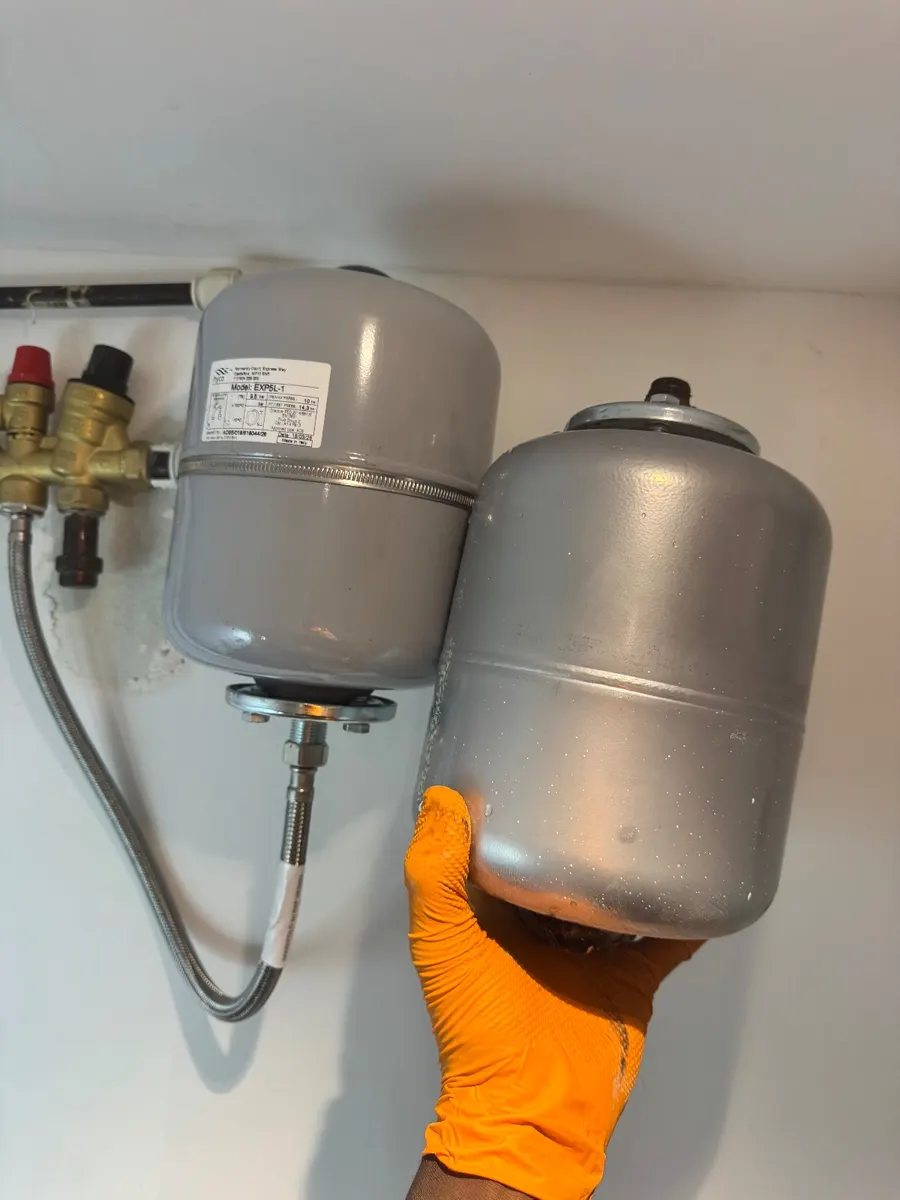
Get a fixed priceRecent cylinder jobs, in photos
Photos from our own cylinder jobs this autumn. Several show a repair that saved the customer a new cylinder.
Which type of cylinder do you have, and which should you fit?
The two decisions that change the job most are vented or unvented, and direct or indirect. If you are unsure what you have, the answer is on the cylinder: a loft tank means vented, a tundish and expansion vessel mean unvented.
Unvented (sealed, mains pressure)
No loft tank. It is fed straight from the mains, so showers run at mains pressure. Fitting and servicing is notifiable work under Part G of the Building Regulations, so it needs a G3 qualified engineer. You can spot one by the tundish (a small funnel on the discharge pipe) and the expansion vessel.
Vented (open vent, loft tank)
Fed from a cold-water tank in the loft, so pressure depends on the height of the tank above the cylinder. Common in older London homes. If the loft tank and a vent pipe are there, it is vented. Often the cheapest like-for-like swap where the tank is staying.
Direct (immersion heated)
Heated by one or two electric elements only, with no boiler coil. Found in all-electric flats and homes off the gas network. Two elements fail separately, which is why a half-hot cylinder is often an element, not a tank, problem.
Indirect (boiler heated)
A coil inside the cylinder carries heat from the boiler. The usual set-up behind a gas system boiler, normally with a backup immersion element as well.
Smart cylinders (for example Mixergy)
Heat only the top part of the tank and can be controlled by an app or tariff. They make most sense with solar PV, cheap-rate electricity or a heat pump on the way.
Moving from vented to unvented is worth it when the mains has enough pressure and flow and there is a route for the discharge pipe to reach outside. If either is missing, a vented swap is the honest answer. Manufacturers publish the minimum mains pressure and flow for each model, so we measure before we recommend.
What size cylinder do you need?
A common rule of thumb is 35 to 45 litres per person, with extra for a second bathroom or a daily bath. Use the table as a starting point and read the full sizing guide if two showers run at once.
| Property | People | Bathrooms | Starting size |
|---|---|---|---|
| Studio or 1-bed flat | 1 | 1 shower | about 120L |
| 2-bed flat or maisonette | 2 to 3 | 1 bath or shower | about 150 to 170L |
| 3-bed terrace or semi | 3 to 4 | 1 bath and 1 shower | about 180 to 210L |
| 4-bed family home | 4 to 5 | 2 bathrooms | about 210 to 250L |
| 5-bed or larger | 5+ | 2 to 3 bathrooms | about 250 to 300L |
Four checks that decide whether a cylinder suits your property
These are the points that turn a straightforward quote into a surprise on the day. Each one comes from a manufacturer manual or an official source, linked so you can read the original.
Mains pressure and flow
The water supplier's guaranteed standard is low, about 0.7 bar (7 m head), with about 1 bar as its aim. Heatrae Sadia's Megaflo Eco installation manual asks for a minimum of 1.5 bar and 20 litres a minute at the cylinder. A house can meet the first and miss the second, so measure dynamic pressure with water running and time a bucket fill rather than trusting a static gauge reading.
WaterSafe: minimum water pressureWhere the discharge pipe can go
Approved Document G sets out the discharge rules: the tundish within 600 mm of the safety valve, set vertically with a visible air gap, then a pipe that drops at least 300 mm and falls at 1 in 200, sized up once the run is longer than 9 m equivalent. In a mid-floor flat with no outside wall nearby, this is the check that decides whether an unvented cylinder is possible at all.
GOV.UK: Approved Document GWill it fit, and will the floor carry it
Measure the external size including the insulation, not the tank volume, and check the loft hatch, stairs and door widths. A 210-litre Megaflo weighs about 250 kg when full according to its manual, which matters for an upper floor or a boarded loft.
Megaflo Eco installation manual (Heatrae Sadia)Hard water and your warranty
The Drinking Water Inspectorate calls water of 200 to 300 mg/l hard and anything over 300 mg/l very hard, and most of London sits in those bands. Some manufacturers exclude scale damage, and Joule's instructions set a hardness limit of 200 mg/l for its warranty, so check what scale protection your maker expects before you rely on the warranty.
Drinking Water Inspectorate: water hardnessWhat the manufacturer warranty actually says
Warranty length varies by maker and model, and every one depends on the cylinder being registered on time and serviced each year. Terms below are from the makers' own published pages and manuals; they change, so check the current wording for the exact model you are quoted.
| Maker | Cover | Conditions in the small print |
|---|---|---|
| Heatrae Sadia Megaflo Eco | Lifetime for the first domestic owner, 30 years on resale | Annual service, registration within 30 days, scale and frost excluded |
| Telford | Lifetime | Registration within 28 days, Benchmark checklist and service record needed for a claim |
| Joule | 25 years on the vessel | Registration within 28 days, annual service log, scale and labour excluded, water chemistry limits |
Sources: Heatrae Sadia product warranty page, Telford and Joule installation instructions, read October 2026. A missing service record is the most common reason a claim fails.
What happens from first call to finished job
Phone or WhatsApp
Call 0207 046 1363 or message 07456 975436. We ask the cylinder type, rough age and what has gone wrong, and give you the fixed prices above.
Diagnosis or survey
The engineer checks mains pressure and flow, the cupboard, the discharge route and the condition of the pipework, then tells you in writing whether to repair or replace.
Written quote
Labour and parts, the cylinder and any extras each on their own line. You see what is included before anything is ordered.
Fitting day
A like-for-like unvented swap is typically half a day to a day, and hot water is back the same day on about 95% of our jobs. A vented-to-unvented conversion takes longer because the mains feed, discharge route and expansion vessel are all new.
Commissioning and paperwork
Pressure and temperature devices are tested, the logbook is completed and the Building Regulations notification is made. Ask for the certificate and keep it with the house papers.
G3 qualified plumber: unvented cylinder installation and Building Regulations
Any unvented cylinder over 15 litres is covered by Part G of the Building Regulations (Approved Document G). Installing, replacing or modifying one is notifiable work, so the installer must be G3 qualified and either belong to a competent person scheme or notify Building Control. In practice that means three things to ask for:
- Proof the engineer is G3 qualified before any drain-down starts.
- The Building Regulations certificate once the work is notified. Keep it with your buildings insurance and conveyancing papers.
- A completed logbook from commissioning. Manufacturers usually ask for annual servicing to keep a warranty valid, so check the terms for your model.
Our engineers are G3 qualified. See the G3 explainer and how to check an engineer before you book anyone.
Past London cylinder jobs
Five anonymised jobs completed by our engineers over previous years, before they joined Emergency Repairs London. Prices are what was charged at the time and are not today's quote, so use the fixed prices above for a current figure. They show how much the discharge route, access and cylinder type drive the cost.
Victorian conversion, Camden: vented to 210L Megaflo Eco
1890s terrace, top-floor flat, original loft tank feeding a 1985 copper indirect cylinder, dribbling shower. Mains tested at 3.4 bar dynamic. Loft tank removed, 210L Megaflo Eco fitted in the airing cupboard, discharge piped through the soffit and G3 notification made. Job time: 9 hours. Total: £2,395.
1930s semi, Hackney: like-for-like 180L Telford swap
Twelve-year-old Range Tribune HE 180L. The expansion vessel had failed twice in twelve months and the tank was starting to weep at the lower boss. Replaced with a Telford Tempest 180L, new G3 safety group, same discharge route, primary coil reconnected. Six hours, £1,745.
Apartment block, Wandsworth: 150L Megaflo direct
All-electric Battersea apartment block, original 2008 150L direct cylinder, both elements scaled solid and the tank lining starting to bubble. New 150L Megaflo direct fitted with two new immersions on Economy 7 wiring. £1,495.
Georgian townhouse, Westminster: 300L OSO Super S
Four-bath property on an original 1990s vented system where two showers could not run at once. Full vented-to-unvented conversion, 300L OSO Super S stainless cylinder in the basement plant room, mains upgraded to 28mm, discharge to a gully under the stairs. Two-day install. £3,295.
Heat-pump-ready upgrade, Islington: Mixergy 210L
Homeowner planning an air-source heat pump. Existing 1995 vented cylinder replaced with a Mixergy 210L heat-pump-ready smart cylinder, installed with a PV diverter and an agile tariff. £3,495.
Questions to ask any firm before you accept a quote
Cylinder quotes are hard to compare because they bundle different things. These eight questions work on ours and on anyone else's:
- Is the cylinder a separate line, with its make, model and litres written down?
- Does the price include removing and disposing of the old cylinder?
- Where will the tundish and discharge pipe run, and has anyone checked it can reach outside?
- Is the installer G3 qualified, and who notifies Building Control?
- Will I get the Building Regulations certificate, and when?
- Is the mains pressure and flow being measured, or is it assumed?
- What is included if the old isolators or valves will not shut off?
- Who do I call if it drips or fails in the first year?
Get a fixed price for your cylinder
Tell us what you need and we call you back with a fixed price for replacement, repair, installation or service. No VAT added, no obligation.
Cylinder guides
Frequently asked questions
How much does it cost to replace a hot water cylinder in London?
How long does a cylinder replacement take?
Should I repair or replace my hot water cylinder?
Do I need a G3 qualified engineer?
Is my cylinder vented or unvented?
Is a dripping tundish an emergency?
What size hot water cylinder do I need?
How much does hot water cylinder repair cost?
How much does a hot water cylinder service cost?
Who can install an unvented cylinder in London?
How often does an unvented cylinder need servicing?
How long does a hot water cylinder last?
What warranty does a new cylinder come with?
Is there a call-out fee?
Hot water cylinder installation across London
We install, replace and repair hot water cylinders across all 32 London boroughs and the City, including Kidbrooke, Brockley, Penge, Crystal Palace, Greenwich, Woolwich, Clapham and Canary Wharf.
All cylinder services
Every cylinder job we carry out in London
By cylinder type
Direct unvented cylinders
Electric immersion cylinders, elements and wiring.
Indirect unvented cylinders
Boiler-fed coil cylinders behind a gas system.
Vented cylinder replacement
Like-for-like swaps with a loft tank.
Twin-coil cylinders
Boiler plus solar thermal.
Solar cylinders
Cylinders for solar thermal and PV diverters.
HMO cylinders
Sizing for shared houses and simultaneous use.
By brand
Repairs and parts
Emergency Repairs London Ltd · Company No. 17120057 · £5M public liability · G3 qualified · 24/7 emergency line · 0207 046 1363